Translate

domingo, 21 de abril de 2013

Moby Dick, by Herman Malville


Moby-Dick is a novel by Herman Melville, first published in 1851.It is considered to be one of the Great American Novels and a treasure of world literature.

The story tells the adventures of wandering sailor Ishmael, and his voyage on the whaleship Pequod, commanded by Captain Ahab. Ishmael soon learns that Ahab has one purpose on this voyage: to seek out Moby Dick, a ferocious, enigmatic white sperm whale. In a previous encounter, the whale destroyed Ahab's boat and bit off his leg, which now drives Ahab to take revenge.
Moby-Dick has been classified as American Romanticism. It was first published by Richard Bentley in London on October 18, 1851, in an expurgated three-volume edition titled The Whale, and weeks later as a single volume, by New York City publisher Harper and Brothers as Moby-Dick; or, The Whale on November 14, 1851. The book initially received mixed reviews, but Moby-Dick is now considered part of the Western canon, and at the center of the canon of American novels.
"Moby-Dick" begins with the line "Call me Ishmael." According to the American Book Review's rating in 2011, this is one of the most recognizable opening lines in Western literature.
Adaptions:
The novel has been adapted a number of times in various media including the stage, radio, TV, comics and graphic novels and movies. The most famous of these was the John Huston film of 1956 produced from a screenplay by author Ray Bradbury.


About the author: 

Herman Melville (August 1, 1819 – September 28, 1891) was an American novelist, short story writer, essayist, and poet. He is best known for his novel Moby-Dick. His first three books gained much contemporary attention, but after a fast-blooming literary success in the late 1840s, his popularity declined precipitously in the mid-1850s and never recovered during his lifetime.
When he died in 1891, he was almost completely forgotten. In 1919, the unfinished manuscript for his novella Billy Budd was discovered by his first biographer. He published a version in 1924, which was quickly acclaimed by notable British critics as another masterpiece of Melville's. He was the first writer to have his works collected and published by the Library of America.



Top 100 books of all time

This list of the 100 best books of all time was prepared by Norwegian Book Clubs. They asked 100 authors from 54 countries around the world to nominate the ten books which have had the most decisive impact on the cultural history of the world, and left a mark on the authors' own thinking. Don Quixote was named as the top book in history but otherwise no ranking was provided.


1984 by George Orwell, England, (1903-1950)
A Doll's House by Henrik Ibsen, Norway (1828-1906)
A Sentimental Education by Gustave Flaubert, France, (1821-1880)
Absalom, Absalom! by William Faulkner, United States, (1897-1962)
The Adventures of Huckleberry Finn by Mark Twain, United States, (1835-1910)
The Aeneid by Virgil, Italy, (70-19 BC)
Anna Karenina by Leo Tolstoy, Russia, (1828-1910)
Beloved by Toni Morrison, United States, (b. 1931)
Berlin Alexanderplatz by Alfred Doblin, Germany, (1878-1957)
Blindness by Jose Saramago, Portugal, (1922-2010)
The Book of Disquiet by Fernando Pessoa, Portugal, (1888-1935)
The Book of Job, Israel. (600-400 BC)
The Brothers Karamazov by Fyodor M Dostoyevsky, Russia, (1821-1881)
Buddenbrooks by Thomas Mann, Germany, (1875-1955)
Canterbury Tales by Geoffrey Chaucer, England, (1340-1400)
The Castle by Franz Kafka, Bohemia, (1883-1924)
Children of Gebelawi by Naguib Mahfouz, Egypt, (b. 1911)
Collected Fictions by Jorge Luis Borges, Argentina, (1899-1986)
Complete Poems by Giacomo Leopardi, Italy, (1798-1837)
The Complete Stories by Franz Kafka, Bohemia, (1883-1924)
The Complete Tales by Edgar Allan Poe, United States, (1809-1849)
Confessions of Zeno by Italo Svevo, Italy, (1861-1928)
Crime and Punishment by Fyodor M Dostoyevsky, Russia, (1821-1881)
Dead Souls by Nikolai Gogol, Russia, (1809-1852)
The Death of Ivan Ilyich and Other Stories by Leo Tolstoy, Russia, (1828-1910)
Decameron by Giovanni Boccaccio, Italy, (1313-1375)
The Devil to Pay in the Backlands by Joao Guimaraes Rosa, Brazil, (1880-1967)
Diary of a Madman and Other Stories by Lu Xun, China, (1881-1936)
The Divine Comedy by Dante Alighieri, Italy, (1265-1321)
Don Quixote by Miguel de Cervantes Saavedra, Spain, (1547-1616)
Essays by Michel de Montaigne, France, (1533-1592)
Fairy Tales and Stories by Hans Christian Andersen, Denmark, (1805-1875)
Faust by Johann Wolfgang von Goethe, Germany, (1749-1832)
Gargantua and Pantagruel by Francois Rabelais, France, (1495-1553)
Gilgamesh Mesopotamia, (c 1800 BC)
The Golden Notebook by Doris Lessing, England, (b.1919)
Great Expectations by Charles Dickens, England, (1812-1870)
Gulliver's Travels by Jonathan Swift, Ireland, (1667-1745)
Gypsy Ballads by Federico Garcia Lorca, Spain, (1898-1936)
Hamlet by William Shakespeare, England, (1564-1616)
History by Elsa Morante, Italy, (1918-1985)
Hunger by Knut Hamsun, Norway, (1859-1952)
The Idiot by Fyodor M Dostoyevsky, Russia, (1821-1881)
The Iliad by Homer, Greece, (c 700 BC)
Independent People by Halldor K Laxness, Iceland, (1902-1998)
Invisible Man by Ralph Ellison, United States, (1914-1994)
Jacques the Fatalist and His Master by Denis Diderot, France, (1713-1784)
Journey to the End of the Night by Louis-Ferdinand Celine, France, (1894-1961)
King Lear by William Shakespeare, England, (1564-1616)
Leaves of Grass by Walt Whitman, United States, (1819-1892)
The Life and Opinions of Tristram Shandy by Laurence Sterne, Ireland, (1713-1768)
Lolita by Vladimir Nabokov, Russia/United States, (1899-1977)
Love in the Time of Cholera by Gabriel Garcia Marquez, Colombia, (b. 1928)
Madame Bovary by Gustave Flaubert, France, (1821-1880)
The Magic Mountain by Thomas Mann, Germany, (1875-1955)
Mahabharata, India, (c 500 BC)
The Man Without Qualities by Robert Musil, Austria, (1880-1942)
The Mathnawi by Jalal ad-din Rumi, Afghanistan, (1207-1273)
Medea by Euripides, Greece, (c 480-406 BC)
Memoirs of Hadrian by Marguerite Yourcenar, France, (1903-1987)
Metamorphoses by Ovid, Italy, (c 43 BC)
Middlemarch by George Eliot, England, (1819-1880)
Midnight's Children by Salman Rushdie, India/Britain, (b. 1947)
Moby-Dick by Herman Melville, United States, (1819-1891)
Mrs. Dalloway by Virginia Woolf, England, (1882-1941)
Njaals Saga, Iceland, (c 1300)
Nostromo by Joseph Conrad, England,(1857-1924)
The Odyssey by Homer, Greece, (c 700 BC)
Oedipus the King Sophocles, Greece, (496-406 BC)
Old Goriot by Honore de Balzac, France, (1799-1850)
The Old Man and the Sea by Ernest Hemingway, United States, (1899-1961)
One Hundred Years of Solitude by Gabriel Garcia Marquez, Colombia, (b. 1928)
The Orchard by Sheikh Musharrif ud-din Sadi, Iran, (c 1200-1292)
Othello by William Shakespeare, England, (1564-1616)
Pedro Paramo by Juan Rulfo Juan Rulfo, Mexico, (1918-1986)
Pippi Longstocking by Astrid Lindgren, Sweden, (1907-2002)
Poems by Paul Celan, Romania/France, (1920-1970)
The Possessed by Fyodor M Dostoyevsky, Russia, (1821-1881)
Pride and Prejudice by Jane Austen, England, (1775-1817)
The Ramayana by Valmiki, India, (c 300 BC)
The Recognition of Sakuntala by Kalidasa, India, (c. 400)
The Red and the Black by Stendhal, France, (1783-1842)
Remembrance of Things Past by Marcel Proust, France, (1871-1922)
Season of Migration to the North by Tayeb Salih, Sudan, (b. 1929)
Selected Stories by Anton P Chekhov, Russia, (1860-1904)
Sons and Lovers by DH Lawrence, England, (1885-1930)
The Sound and the Fury by William Faulkner, United States, (1897-1962)
The Sound of the Mountain by Yasunari Kawabata, Japan, (1899-1972)
The Stranger by Albert Camus, France, (1913-1960)
The Tale of Genji by Shikibu Murasaki, Japan, (c 1000)
Things Fall Apart by Chinua Achebe, Nigeria, (b. 1930)
Thousand and One Nights, India/Iran/Iraq/Egypt, (700-1500)
The Tin Drum by Gunter Grass, Germany, (b.1927)
To the Lighthouse by Virginia Woolf, England, (1882-1941)
The Trial by Franz Kafka, Bohemia, (1883-1924)
Trilogy: Molloy, Malone Dies, The Unnamable by Samuel Beckett, Ireland, (1906-1989)
Ulysses by James Joyce, Ireland, (1882-1941)
War and Peace by Leo Tolstoy, Russia, (1828-1910)
Wuthering Heights by Emily Brontë, England, (1818-1848)
Zorba the Greek by Nikos Kazantzakis, Greece, (1883-1957)


sábado, 20 de abril de 2013

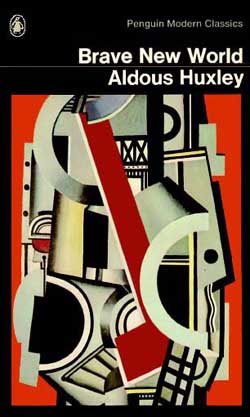
Brave new world, by Aldoux Huxley


Brave New World is a novel written in 1931 and published in 1932, set in London of AD 2540 (632 A.F. – "After Ford" – in the book)It looks ahead to a future when individuals will essentially cease to exist; The World Controllers have finally created the ideal society. In laboratories worldwide, genetic science has brought the human race to perfection. From the Alpha-Plus mandarin class to the Epsilon-Minus Semi-Morons, designed to perform menial tasks, man is bred and educated to be blissfully content with his pre-destined role.

But, in the Central London Hatchery and Conditioning Centre, Bernard Marx is unhappy. Harbouring an unnatural desire for solitude, feeling only distaste for the endless pleasures of compulsory promiscuity, Bernard has an ill-defined longing to break free. A visit to one of the few remaining Savage Reservations where the old, imperfect life still continues, may be the cure for his distress…

John is a young man from these Savage Reservations who tries unsuccessfully to live life on his own terms. He is defeated by the World State, a global power that uses science and technology to control humanity. The World State achieves this feat not with force but with a combination of genetic engineering, educational programming, entertainment, and narcotics, all of which keep people perpetually "happy." While the values of civilization horrify John, he is unable to define an alternative.

A fantasy of the future that sheds a blazing critical light on the present--considered to be Aldous Huxley' s most enduring masterpiece.

On the right side you can see a full interview to this writer.

There have been two movies done about this book, one directed by Burt Brinckerhoff(1980) and the other by  Leslie Libman and Larry Williams (1998).

You may see the trailer of this last one below:

What would you do in this Brave New world? Would you sacrifice your will to the common welfare? Would you go into exile? Would you kill yourself? What is it, you don´t know? Well hurry up, you don´t have much time to decide: This Brave New World is already here.


Perfume, by Patrick Süskind


Perfume: The Story of a Murderer, is the first novel by the German writer, Patrick Süskind.


It was published on 1985 and this historical and cross- genre novel became a best-seller quickly.


It explores the sense of smell and its relationship with the emotional meaning that scents may carry. Above all it is a story of identity, communication and the morality of the human spirit.
The story focuses on Jean-Baptiste Grenouille, a perfume apprentice in 18th-century France who, born with no body scent himself, begins to stalk and murder virgins in search of the "perfect scent", which he finds in a young woman named Laure, whom his acute sense of smell finds in a secluded private garden in Grass.


The director Tom Tykwer made a film based on the book.
Perfume:The story of a Murdered was realised on September 14, 2006 in Germany. 
Ben Whishaw  Dustin Hoffman, Alan Rickman,Rachel Hurd-Wood y Karoline Herfurth stars in the film.


To know more about the film, here is the trailler.


domingo, 7 de abril de 2013

A Game of Thrones, by George R.R. Martin.

A Game of Thrones is the first novel in A Song of Ice and Fire, a series of high fantasy novels by American author George R.R. Martin.
 
It was first published on 6 August 1996.
In the novel, presenting various points of view and plot-lines, Martin introduces the noble houses of Westeros, the Wall, and the Targaryen plot-line. The novel has lent its name to several spin-off works based on the series, such as several games. It is also the basis for the first season of Game of Thrones, an HBO television series which premiered in April 2011. A March 2013 paperback TV tie-in re-edition is also to be titled Game of Thrones, without the "A".
Awards and nominations.
  • Locus Award- Best Novel (Fantasy) (Won) – (1997)
  • World Fantasy Award – Best Novel (Nominated) – (1997)
  • Hugo Award – Best Novella for Blood of the Dragon (Won) – (1997)
  • Nebula Award – Best Novel (Nominated) – (1997)
  • Ignotus Award – Best Novel (Foreign) (Won) – (2003)

  • It has been adapted in a HBO television series, which has become the most successful adaptation of it.
    It premiered on HBO in the United States on April 17, 2011. 
    Game of Thrones has obtained an exceptionally broad and active international fan base. It received widespread acclaim by critics, although its use of nudity has been criticized. The series won numerous awards and nominations — including two Primetime Emmy Award nominations for Outstanding Drama Series, a Golden Globe Award nomination for Best Television Series – Drama, a Hugo Award for Best Dramatic Presentation in Long Form, and a Peabody Award.


    To know more about the author, watch this video:

    The House Of The Spirits, by Isabel Allende

    Do you like books that talk about passion, greed, love, death, revolution, politcs, ideals, hope...


    The House of the Spirits (La casa de los espíritus, 1982) is the debut novel by Isabel Allende. Let´s see what it is about:

    In one of the most important and beloved Latin American works of the twentieth century, Isabel Allende weaves a luminous tapestry of three generations of the Trueba family, revealing both triumphs and tragedies. Here is patriarch Esteban, whose wild desires and political machinations are tempered only by his love for his ethereal wife, Clara, a woman touched by an otherworldly hand. Their daughter, Blanca, whose forbidden love for a man Esteban has deemed unworthy infuriates her father, yet will produce his greatest joy: his granddaughter Alba, a beautiful, ambitious girl who will lead the family and their country into a revolutionary future.

    The House of the Spirits is an enthralling saga that spans decades and lives, twining the personal and the political into an epic novel of love, magic, and fate


    In 1993 the book was adapted into a film (The house of the Spirits

    by Danish director Bille Augoust.


    To know more about the author, watch this video: